Canadian-Made Piano Music for Teachers and Students

Why Every Piano Student Should Improvise - And How to Make It Feel Natural
Learn why piano improvisation matters and how to start naturally with simple, low-pressure ideas. Explore Wee Songs and build confidence at the piano.
TEACHING TIPSREPERTOIRE PICKSSTUDENT MOTIVATION
Jen Smith Lanthier
1/15/20266 min read
Picture this: a student who plays every assigned piece beautifully. They read the notes carefully, they practise diligently, they perform with confidence. Then you close the book and say, "Now just play something - anything you like." And they freeze.
If you've seen this happen - or experienced it yourself - you're not alone. It's one of the most common gaps in traditional piano education, and it has a name: the absence of improvisation.
Here's the good news. It doesn't have to be this way, and it doesn't have to be complicated to fix.
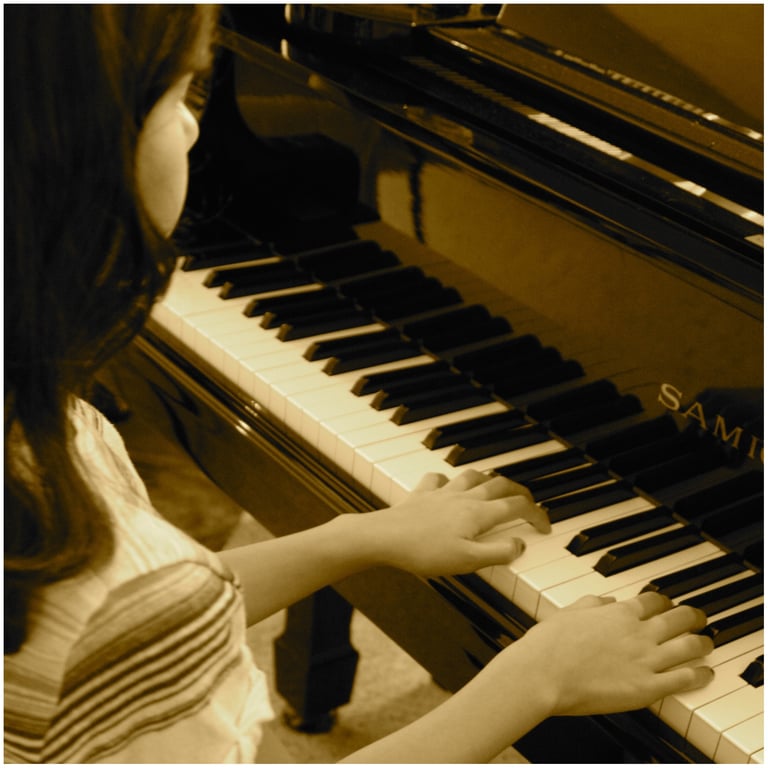
First, Let's Talk About What Improvisation Actually Is
The word "improvisation" carries a lot of baggage. It conjures images of jazz musicians riffing on stage, or virtuosos composing on the spot in front of a crowd. No wonder it sounds intimidating.
But at its core, improvisation is simply musical conversation. It's the difference between reading from a script and knowing the language well enough to speak freely. Every student who hums a melody in the car, who adds a little flourish at the end of a piece, who experiments with the keys when they think no one is listening - they're already improvising. They just don't know it yet.
The goal isn't to turn every piano student into a jazz musician. The goal is to help them feel at home at the piano - not just when the music is in front of them, but always.
Why It Matters More Than Most People Realise
Improvisation isn't a bonus skill. It's a core part of musical development, and recent research backs this up clearly.
A 2024 study in the International Journal of Piano and Creative Arts found that improvisation training has a direct positive influence on musical creativity and emotional expression - and that it expands students' musical thinking in ways that structured repertoire alone simply cannot. A 2025 study from a Finnish music university found something equally compelling: when classical piano students were introduced to improvisation, they began to develop adaptability, resilience, and a growth mindset - qualities that transformed not just their playing, but their entire relationship with learning.
In practical terms, here's what improvisation can build in your students:
Ear training. When students create their own music, they listen differently. They start hearing intervals, patterns, and phrases rather than just reading symbols off a page.
Rhythmic awareness. When students aren't reading notes off a page or trying to figure out difficult rhythms, they relax into their own rhythmic pulse. This gradually forms an awareness of the importance of rhythm and the role it plays in music.
Emotional connection. When a piece belongs to a student - when they made it up - they care about it differently. The piano becomes their instrument, not just a task.
Resilience. Improvisation teaches students that there are no wrong notes, only choices. That mindset - the willingness to try without fear of failure - is one of the most valuable things a music education can offer.
The Secret: Start Before It Feels Like Improvisation
Here's where many teachers and parents get tripped up. They imagine that introducing improvisation means stopping the lesson to do something completely different - something unfamiliar and potentially awkward.
It doesn't have to be that way at all.
The most effective approach is to weave improvisation into lessons so naturally that students don't even notice the transition. When it's part of the regular flow from the very beginning, it never becomes "the scary thing." It's just part of what playing piano means.
Here are some expert tips you can try with your own students:
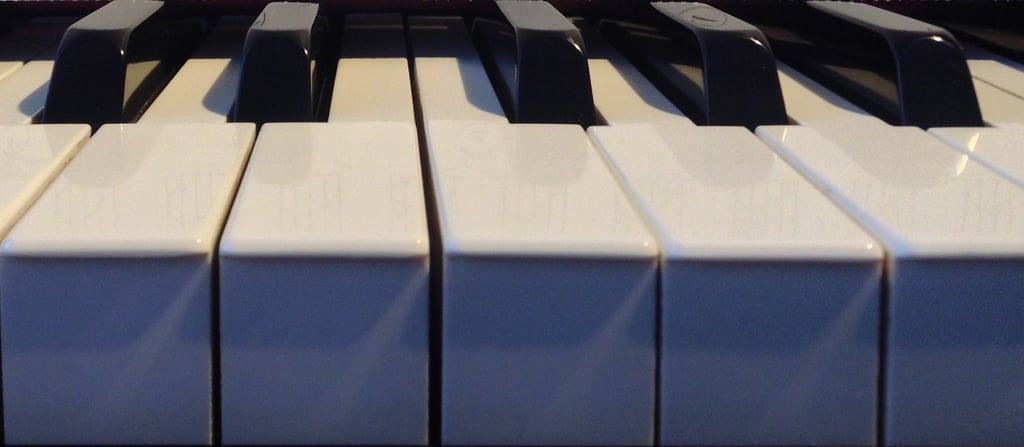
Start with the black keys. This is one of the simplest and most effective entry points for any student, at any age or level. On the black keys, anything you play sounds good. There are no "wrong notes". A student can press any combination of black keys, in any order, at any speed, and it will sound musical. That's not a trick - it's the pentatonic scale at work - but you don't need to explain that. You just need to invite them to explore.
Begin with slow, simple note values. When a student first improvises, they don't need to fill every beat with notes. Starting with long, sustained tones - whole notes, half notes - gives them time to listen to what they're playing and make intentional choices. As they grow more comfortable, you can invite faster rhythms, dotted rhythms, and more variety. The progression happens naturally.
Use imagery and storytelling as a scaffold. This is where the magic really happens, especially with younger students. When a child is imagining a tiny wee folk creature wandering through a mossy forest, they're not thinking about whether they're "doing it right." They're thinking about the story. The music follows the imagination, and the imagination removes the fear.
Make it a regular part of the lesson. Even five minutes of improvisation built into every lesson - not as an add-on, but as an expected part of the routine - normalizes it completely. Students stop thinking of it as something special or difficult. It's just what they do.
What Happens When You Make It a Habit
Think about a student who has had improvisation woven into their lessons from the beginning - or one who discovers it partway through and sticks with it.
Over time, something shifts. They practise differently, because they're not just executing notes - they're exploring. They listen more actively, both to their own playing and to music around them. They take risks more willingly, because they've learned that mistakes are just information, not failures. They enjoy the piano more, because it's a place where they have genuine creative agency.
These aren't small outcomes. They're the difference between a student who quits at Grade 3 because it stopped being fun, and one who plays for life.
A Resource Built Exactly for This
When I started looking for piano improvisation materials to use in my own teaching, I kept running into the same problem: the options were too limited, too narrow in style, or not musically interesting enough to hold a student's attention. I wanted something that was genuinely fun to play, pedagogically sound, and varied enough to work across a wide range of students.
So I wrote it myself.
The Wee Songs series was born from that need. Inspired by the whimsical world of wee folk and their natural surroundings, each book pairs memorable melodies with vivid imagery - the kind of storytelling that sparks a student's imagination and gives them something to play towards. The series spans four progressive volumes, from Pre-Reader through Intermediate, so it grows with your students from their very first lessons all the way through.
Each book includes built-in improvisation prompts, a wide range of styles, keys, metres, and modes, and progressive repertoire that keeps things fresh. The approach is deliberately gentle: start simply, build rhythmic vocabulary gradually, and let the imagery do the heavy lifting. Students don't feel like they're learning something intimidating. They feel like they're playing.
The Wee Songs books work beautifully in private lessons, group classes, recitals, and even exams. And because the series is levelled, you can start a student at exactly the right place and move forward at their pace. I've also created Studio Licenses for these books, so you can meet the needs of all your students.
Ready to Give Wee Songs a Try?
If you're a piano teacher looking for repertoire that makes improvisation easy and natural to introduce - or a parent who wants to give your child a richer, more joyful musical foundation - the Wee Songs series was written exactly for you.
You can explore all four volumes in the Piano Improvisation Books section at oceantailsmusic.com.
Not sure where to start? Grab the Ocean Tails Music free music sampler - a collection of six pieces that build real musicianship skills including improvisation, transposition, ensemble playing, and more. It's a no-commitment way to experience the Ocean Tails Music approach firsthand.
Improvisation doesn't have to be intimidating. With the right materials and a little consistency, it can become one of the most joyful parts of every lesson.
Happy Playing,
Jen
Looking for beginner-friendly pieces to use with your students?
Browse my piano books at Ocean Tails Music.
Jen Smith Lanthier is a Canadian composer and piano educator behind Ocean Tails Music. She creates original repertoire for students at every level.