Canadian-Made Piano Music for Teachers and Students

When Boredom Leads Somewhere Beautiful
Why creative hobbies like music help children—and adults—rediscover focus, imagination, and joy in an age of constant distraction.
TEACHING TIPSSTUDENT MOTIVATIONADULT LEARNERS
Jen Smith Lanthier
5/15/20263 min read
What We Already Know
Most people are already aware of some of the well-known benefits of learning a musical instrument. Music study has been linked to improved memory, attention, information processing, coordination, and long-term cognitive development. These are wonderful benefits, and certainly part of why many families choose to pursue music lessons.
But lately, I’ve been thinking about another benefit that feels increasingly important in today’s world:
A creative hobby gives us somewhere meaningful to go when we are bored.
As both a piano teacher and a parent, I’ve noticed how automatic the pull toward screens has become—not just for children, but for adults too. The moment a task is finished, or there’s a quiet pause in the day, many of us instinctively reach for a device. It happens almost before we realize we’re doing it. Sometimes it seems less about enjoyment, and more about discomfort with stillness.
I see this especially with my son, who is part of Gen Alpha—a generation growing up surrounded by constant stimulation, notifications, algorithms, and endless entertainment. Like many children, he often feels uncomfortable when there’s “nothing to do.” Boredom can feel frustrating to him.
And honestly, that makes sense. Screens offer immediate engagement with very little effort required from us. They ask almost nothing of our brains while giving us endless novelty in return.
Boredom Has Value
Boredom is often the space where imagination begins. It’s where ideas form, creativity surfaces, and curiosity has room to breathe. When we constantly fill every quiet moment with passive consumption, we leave very little room for creative thought.
So I do my best to encourage boredom in our home. I remind my son that it’s okay not to have something planned every second. It’s okay to sit in that uncomfortable pause for a moment.
And interestingly, there is one thing he consistently returns to on his own: his guitar.
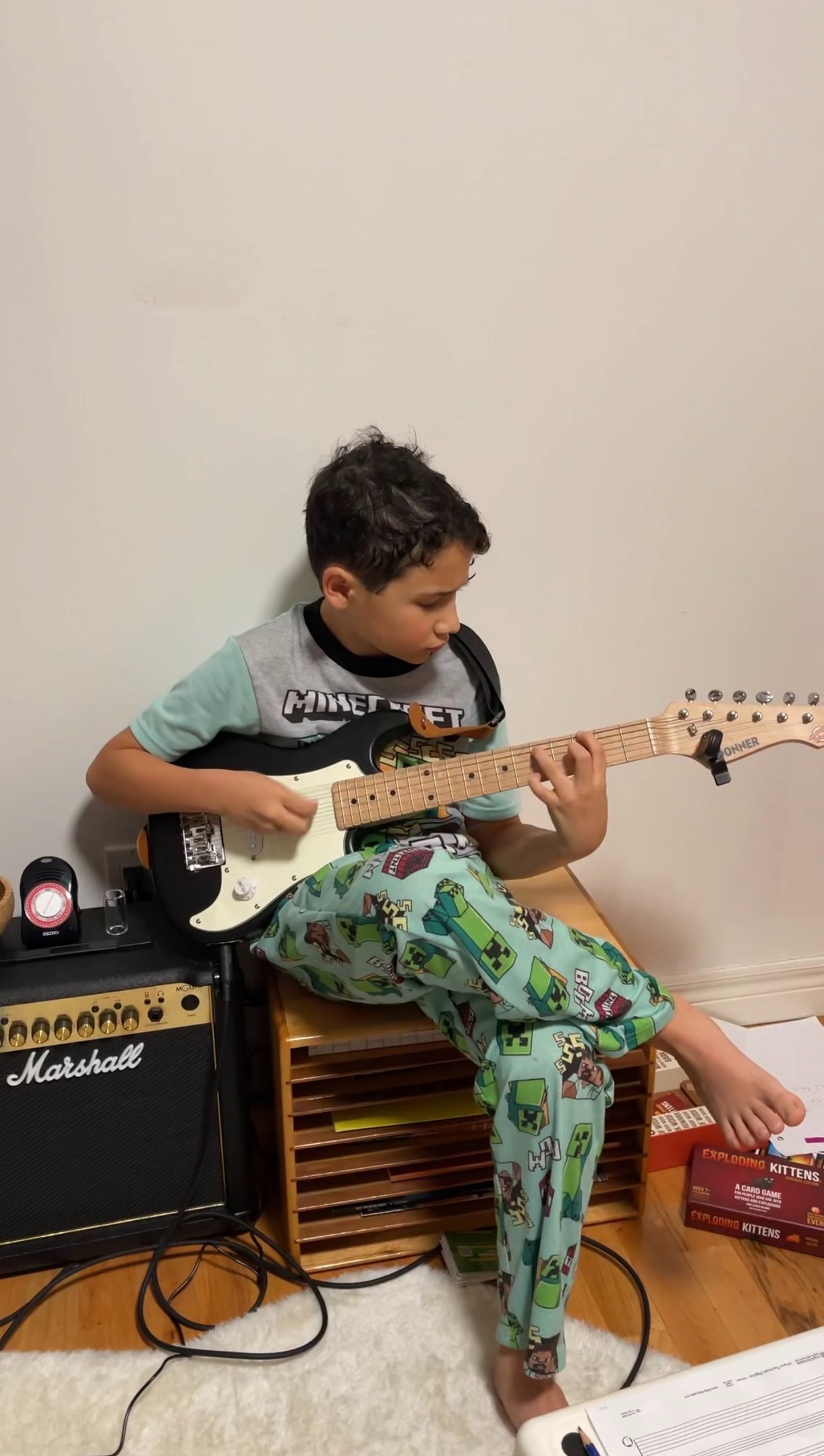
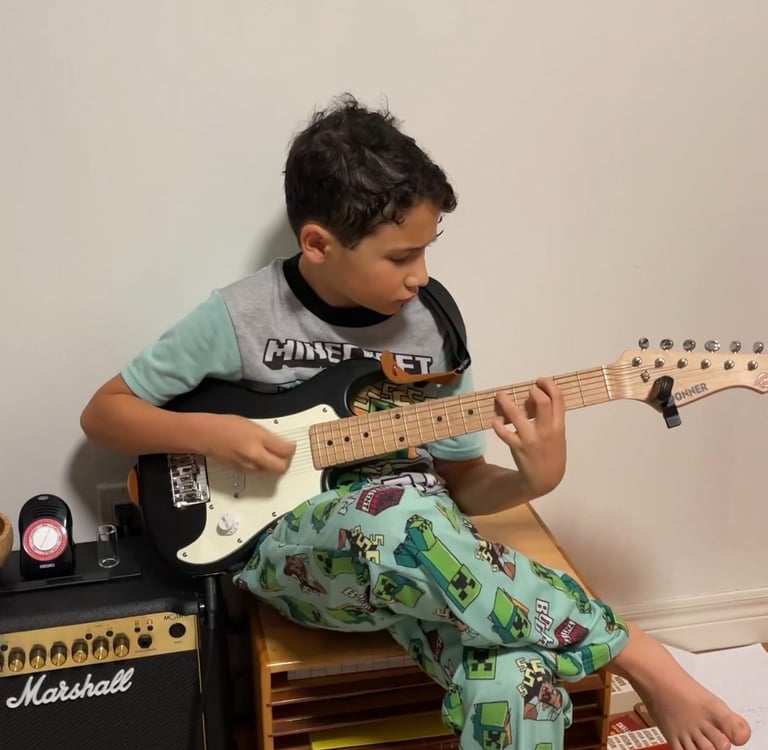
Not because anyone is forcing him to practice. Not because he’s trying to earn a reward. But because creating something himself feels genuinely satisfying.
He’ll work on a difficult solo, slowly hear improvement, and become motivated to keep going. The progress itself becomes rewarding. The challenge becomes engaging. And for a while, screens are forgotten.
To me, this is one of the most valuable aspects of learning music—or any creative pursuit.
Creative hobbies create a healthier kind of reward system.
What Creative Hobbies Offer
Instead of constant passive stimulation, they invite active participation. They ask something of us. Focus. Patience. Problem-solving. Emotional engagement. Persistence.
And in return, they offer something much deeper than distraction: a sense of growth, accomplishment, self-expression, and pride.
Whether it’s learning a new song, finishing a painting, writing a story, or finally mastering a difficult passage at the piano, creating something with your own mind and hands is deeply fulfilling in a way passive entertainment rarely is.
Music is especially powerful because it also gives us a place to process emotion. Some days we play joyfully. Some days we play thoughtfully. Some days music simply helps us feel grounded again. That emotional connection matters.
And while screens certainly aren’t going away—and technology itself is not inherently bad—I do think it’s important that both children and adults have something creative to return to. Something real. Something challenging. Something personal.
A hobby that asks us not just to consume, but to create.
So if you find yourself—or your child—automatically reaching for a screen during every quiet moment, try reaching for an instrument instead. Even for just fifteen minutes. You may be surprised how quickly those small moments begin to feel meaningful.
A Few Simple Ways to Make Music Practice Feel More Natural
If piano practice has started to feel more like a chore than a creative outlet, here are a few things that can help:
Practice at roughly the same time each day to build routine
Keep sessions small and manageable—even 15 focused minutes is valuable
Aim for consistency over perfection
Put your phone out of reach while you play
Try going for a walk before practicing—nature often helps reset the mind creatively
Choose music you genuinely love and want to learn
Most importantly, allow music to become something you return to willingly, not just another task to complete.
If you’re looking for inspiring and approachable repertoire, you can also explore the free sampler and other resources available through Ocean Tails Music, including Attainable Classics, original piano music, pop arrangements, and more.
Happy Playing,
Jen
Looking for collections of original piano pieces that feel inspiring and build skills?
Browse my piano books at Ocean Tails Music.
Jen Smith Lanthier is a Canadian composer and piano educator behind Ocean Tails Music. She creates original repertoire for students at every level.