Canadian-Made Piano Music for Teachers and Students

Piano Lessons, Joy, and the Question Nobody Asked Me Growing Up
A personal look at the robots vs. joy debate in Canadian piano education, and why a more open, student-centred approach can build lasting musicianship.
TEACHING TIPSSTUDENT MOTIVATIONCOMPOSER'S CORNER
Jen Smith Lanthier
3/15/20265 min read
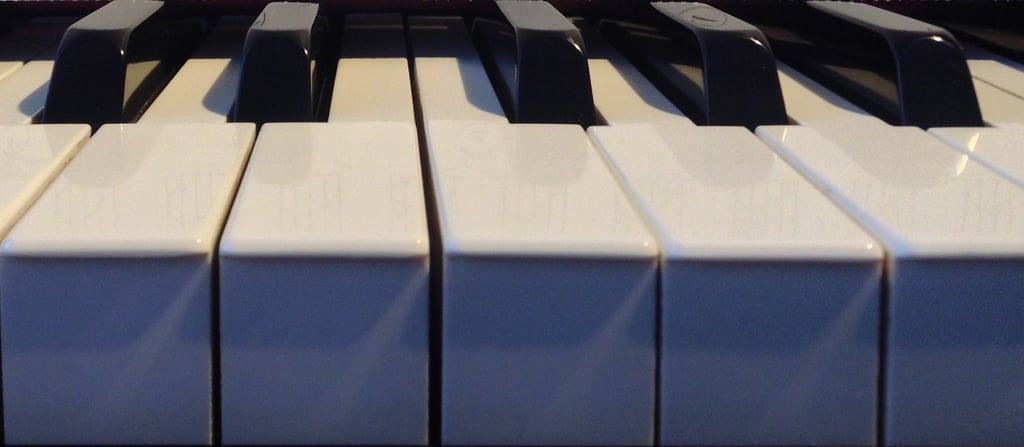
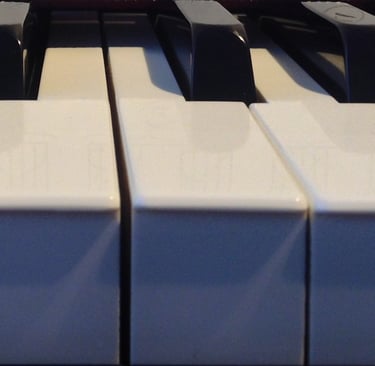
Picture this: a student who plays every assigned piece beautifully. They read the notes carefully, they practise diligently, they perform with confidence. Then you close the book and say, "Now just play something - anything you like." And they freeze.
If you've seen this happen - or experienced it yourself - you're not alone. It's one of the most common gaps in traditional piano education, and it has a name: the absence of improvisation.
Here's the good news. It doesn't have to be this way, and it doesn't have to be complicated to fix.
The System I Grew Up In
When I was learning piano, RCM wasn't just the dominant path in Canadian music education - it was essentially the only path. There were a few smaller conservatories, but they carried the quiet stigma of being "lesser than." If you were serious about piano, you did RCM. Full stop.
And honestly? There was a lot to appreciate about it. The repertoire introduced me to a wide range of classical genres and composers. The structure gave me clear goals and a sense of progress. The technical rigour built real skills. I'm genuinely glad I went through it.
But it was also, looking back, quite narrow.
The syllabus determined what was worth playing. The exam structure determined what was worth practising. And anything outside those boundaries - improvisation, musicianship beyond the prescribed training, music from a wider variety of living Canadian composers, jazz, or anything with a different flavour - simply didn't come up. Not because my teachers were doing anything wrong. That was just the shape of the world we were all working within.
When I Started Teaching, I Started Noticing
My early years of teaching looked a lot like my early years of learning. I knew RCM, so I taught RCM. I assigned the method books, I prepared students for exams, I followed the ladder.
But gradually, as I grew into my own as a teacher, I started paying attention to something I hadn't expected: not every student thrived in that structure. Some did - genuinely, happily, and the system served them beautifully. But others struggled not with the music itself, but with the feeling that piano was something being done to them rather than something they got to explore.
I started wondering: what if there's more than one way to build a musical human being?
I didn't arrive at that question all at once. It was more of a slow opening - becoming aware of other pedagogical approaches, reading about holistic music education, experimenting cautiously with new materials, noticing what happened when a student played something they actually loved. The shift happened gradually, over years of teaching, and it changed everything about how I understood my role as a teacher and mentor.
What a More Holistic Approach Looked Like in Practice
I want to be careful here, because "holistic" can sound vague - like a rejection of rigour in favour of just letting students play whatever they want. That's not what I mean at all.
What I mean is this: I started asking different questions. Not just "what does the syllabus require?" but "what does this particular student need? What lights them up? What kind of musician do they want to become?" And also, "what are all the skills needed to become successful at the piano?"
Now there was room to explore. A student who loved folk music could learn the same technical skills through folk repertoire. A student who wanted to write their own songs could develop musicianship through improvisation and keyboard harmonization. A student who had never heard a Canadian composer could discover that music written by someone who grew up in the same country, in the same landscape, felt different to play.
I found, over and over again, that I could teach piano skills just as effectively - sometimes more effectively - through music students genuinely enjoyed playing. The skills transferred. The joy stayed.
The Question at the Heart of It
There's a conversation happening in Canadian music education right now that I find genuinely exciting. Teachers, researchers, and parents are asking something that feels overdue:
what is piano education actually for?
If the answer is "to produce technically proficient performers who can pass standardized exams," then the current dominant model does that reasonably well. But if the answer is something broader - to give students a lifelong relationship with music, to build creativity and confidence and joy alongside technique - then the question of how we get there becomes much more interesting.
Popular conservatories have produced extraordinary musicians, and they continue to offer a rigorous and respected pathway for students who want it. But I do think it's worth asking whether a conservatory education should be the default assumption - the thing every student is pointed toward before anyone has asked what they actually want from music. Because here's what I've come to believe, after years of teaching and composing:
you don't have to be an expert pianist for music to bring you joy.
You don't have to climb a ladder to earn the right to love what you're playing. And the goal of a music education - at least in my view - should be to make sure that joy is always part of the equation, not something you get to experience once the work is done.
What This Means for the Music I Write
When I started composing my own pieces, this belief shaped everything. I wanted to write music that was pedagogically sound - music that actually builds skills, introduces musical concepts, and challenges students appropriately - but that never sacrificed engagement for the sake of rigour. Music that students would want to play, not just music they were assigned.
That meant writing across a wide range of styles. It meant thinking carefully about what a student at each level actually needs, and what will keep them coming back to the piano with curiosity rather than obligation. It meant writing music that leaves room for creativity, for interpretation, for the student's own personality to come through.
It also meant being honest about what I wished I'd had growing up - more variety, more Canadian voices, more well-rounded musicianship skills and permission to explore.
An Ongoing Conversation
I'm not here to tell anyone to abandon a system that's working for them. What I am here to say is that it doesn't have to be the only conversation we're having.
The most rewarding moments in my teaching career have come from students who discovered that piano could be theirs - not a set of requirements to fulfill, but a language they were learning to speak in their own voice. That's what I want for every student who sits down at a piano, no matter their age and wherever they are in their journey.
If you're curious about what a more varied, joyful approach to piano repertoire can look like in practice, I'd love for you to explore the piano books at oceantailsmusic.com. There's something there for every kind of learner.
Happy Playing,
Jen
Looking for holistic piano learning resources to use with your students?
Browse my piano learning bundles at Ocean Tails Music.
Jen Smith Lanthier is a Canadian composer and piano educator behind Ocean Tails Music. She creates original repertoire for students at every level.